
When you’re shopping for a home in New Jersey, the last thing you want is a surprise buried in the yard. Yet thousands of properties across the Garden State still hide underground oil tanks left over from when heating oil was the norm. A hidden tank isn’t just a nuisance—it can leak, contaminate soil, trigger costly clean‑ups and even delay a home sale. That’s why an oil tank sweep is one of the most important due diligence inspections you can order. In this long‑form guide, I’ll explain what a sweep is, why it matters, what it costs, and how to protect yourself when buying a home. As a local environmental inspector serving communities throughout New Jersey, I’ve helped homeowners avoid expensive surprises and stay compliant with state regulations.
Why Oil Tank Sweeps Are Critical in New Jersey
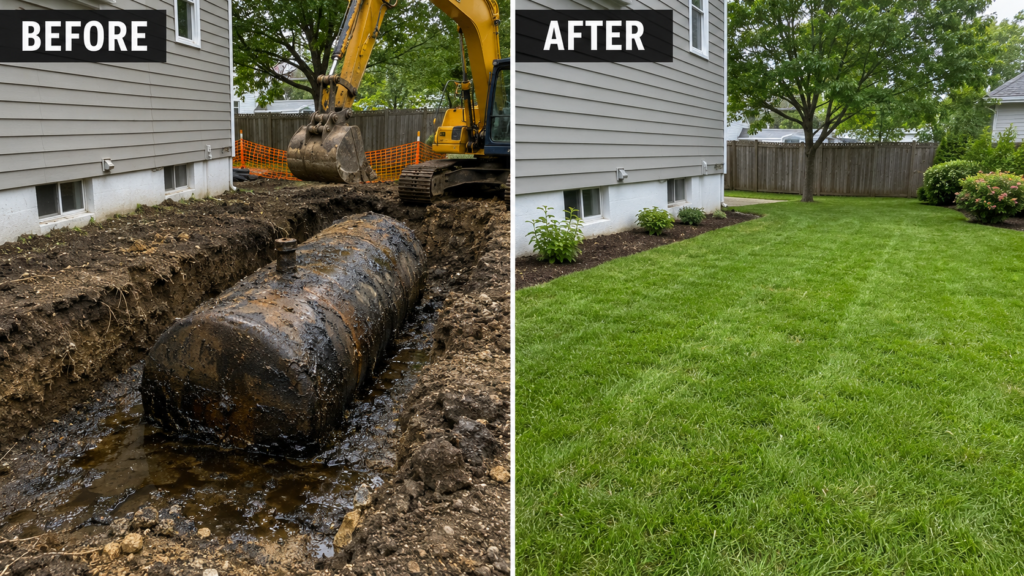
An invisible hazard beneath your feet
Many homes built before the 1970s were heated with oil. When natural gas became more popular, homeowners often abandoned the tanks and switched heating systems. According to Curren Environmental, roughly 75 % of tank sweeps reveal evidence of prior oil heat. That statistic underscores how common hidden tanks really are. An oil tank sweep uses ground‑penetrating radar (GPR) and magnetic sensors to scan the property for buried metal objects. If a tank is present and leaking, the costs can skyrocket. ATS Environmental notes that remediation for a leaking underground storage tank can exceed $10,000 and homeowner’s insurance rarely covers it.
New Jersey’s unique risks
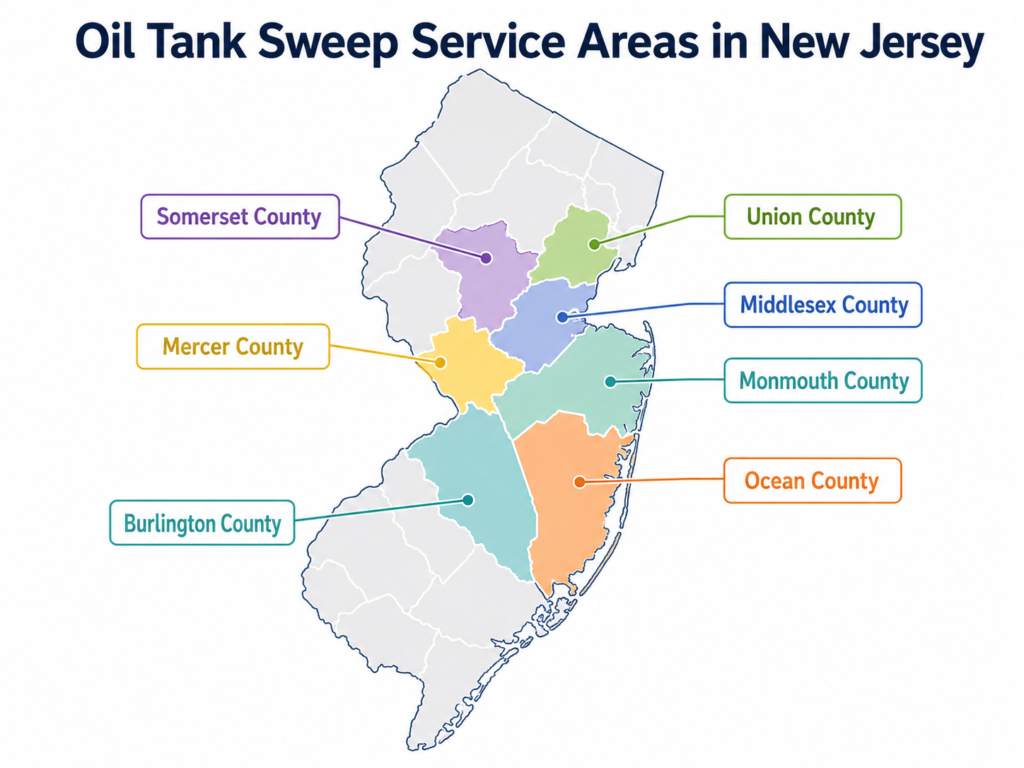
Our state’s climate and housing stock make tank sweeps particularly important. Heavy rains, changing seasons and freeze‑thaw cycles corrode old steel tanks. Many of New Jersey’s older homes—especially in Ocean County, Union County, Mercer County, Monmouth County, Somerset County, Middlesex County and Burlington County—still have tanks buried in the yard or under driveways. Even if the tank was removed, lingering contamination can remain. In fact, there have been over 564,000 releases from underground storage tank systems nationwide. Failing to detect a tank before purchase means you inherit the liability and clean‑up costs.
Legal and financial consequences
New Jersey Department of Environmental Protection (NJDEP) regulations require proper abandonment or removal of all underground oil tanks. If a tank is discovered during a property sale, the seller may be required to remove it before closing. Buyers who skip a sweep risk inheriting fines, remediation orders and a home that’s harder to insure or refinance. Removal of a tank typically costs $1,000–$3,000, but contaminated soil remediation can escalate into tens of thousands of dollars. In severe cases, clean‑up may even approach six figures.
What Is an Oil Tank Sweep?
An oil tank sweep is a non‑invasive inspection that searches for underground storage tanks (USTs). While general home inspectors may look for visible signs, a certified sweep uses specialized equipment:
- Ground‑penetrating radar (GPR) – Sends radar waves into the ground to detect anomalies. GPR is effective at locating tanks under driveways or slabs. Current Environmental cautions that consumer metal detectors are unreliable; GPR is the gold standard.
- Magnetic locators and inductive equipment – Detect metal objects such as steel tanks, piping or fill lines.
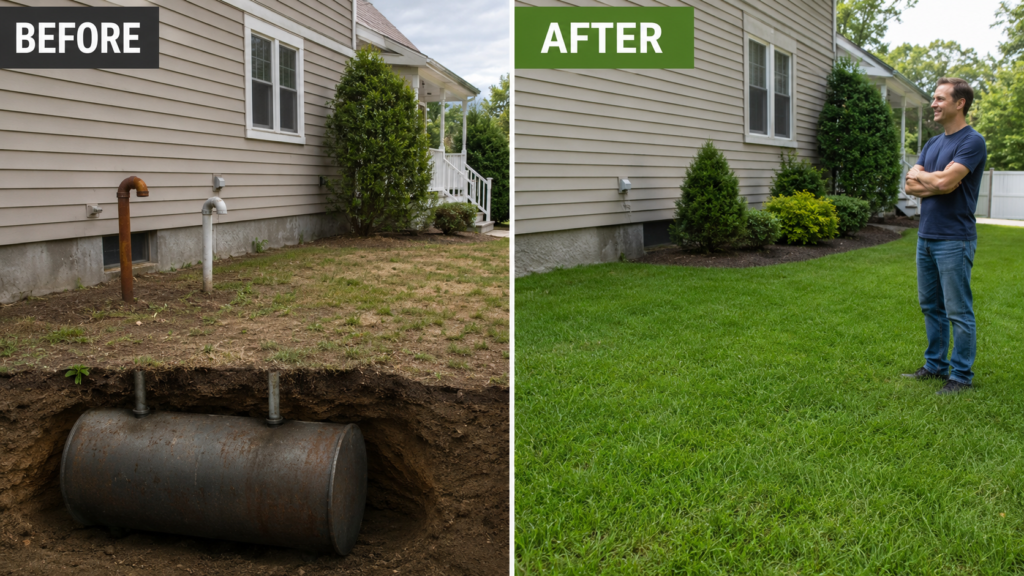
- Visual inspection – A trained inspector looks for fill pipes, vent pipes, extra copper lines entering the basement and other clues.
- File review – In some cases the inspector will check NJDEP or local records to see if a tank was previously removed or if contamination cases exist.
After scanning, the inspector marks any anomalies, documents findings and provides a report. If a tank is suspected, further steps like exploratory digs or soil testing may be recommended.
Certification and professionalism
New Jersey doesn’t require a specific license for conducting sweeps, but reputable oil tank sweep companies carry certifications such as NJDEP Subsurface Evaluation credentials, environmental consulting certifications and full insurance. When searching for the best oil tank sweep in New Jersey, look for companies that:
- Use GPR and metal detection (not just one method).
- Provide detailed reports with photos and site maps.
- Carry professional liability insurance.
- Have experience with local soil conditions and NJDEP regulations.
- Offer additional services like soil sampling, exploratory digs and tank removal.
How Much Does an Oil Tank Sweep Cost?
Typical pricing in New Jersey
The price of an oil tank sweep varies depending on property size, travel distance and equipment used. Here are common price points:
- Standard sweep (most properties) – Around $250. This includes scanning typical residential lots up to about half an acre.
- Ground‑penetrating radar (GPR) – $400+ when GPR is needed to see through reinforced concrete or large areas.
- Discounted rates – Some companies offer discounts to military or first responders, such as $225.
- Starting price – Certain providers advertise sweeps starting at $219.
- Additional fees – Large properties (>½ acre), houses over 6,000 sq ft, long travel distances or multiple dwellings may incur extra charges. Exploratory digs can cost $450+.
Compared to the potential liabilities of missed tanks and contamination, a few hundred dollars for a sweep is a wise investment. Remember that many companies also offer packages that combine sweeps with soil sampling or record searches.
Why removal costs matter
While the sweep itself is affordable, removal and remediation costs are where expenses balloon. Stewart Environmental notes that removing a tank usually costs $1,000–$3,000. If a leak is found and soil must be excavated, bills can soar into tens of thousands. Some insurers and lenders may refuse to cover or finance homes with undisclosed tanks. By investing in a sweep up front, you avoid inheriting a costly mess and can negotiate repairs with the seller.
The Oil Tank Sweep Process: Step‑By‑Step
- Schedule your sweep early – Order a tank sweep as soon as you have a contract. This avoids delays in attorney review periods and gives you time to address any issues.
- Site walk‑through – Your inspector will ask questions about the property’s history, heating systems and previous renovations.
- Equipment setup – The team will lay out GPR equipment and magnetic locators. They’ll mark utilities to avoid interference.
- Surface scan – The inspector systematically scans the property, including yards, driveways, sidewalks and basements. They look for evidence of fill pipes or vent lines.
- Subsurface detection – Using GPR and magnetic devices, the inspector identifies anomalies consistent with a tank’s shape and depth.
- Documentation – All findings are mapped and photographed. If an anomaly suggests a tank, its location is flagged and recommended actions are outlined.
- Report & next steps – You receive a formal report with findings and recommendations. If a tank is suspected, you may need an exploratory dig, soil testing or a quote for removal.
Local Examples and Common Mistakes
As a local inspector, I’ve seen many scenarios where a sweep made the difference:
- Ocean County – A family in Toms River purchased a mid‑century home. The sweep detected an abandoned tank under a deck. The seller paid for removal, saving the buyer from a potential $15,000 soil clean‑up.
- Union County – In Westfield, a property converted to natural gas decades ago still had an old tank. The buyer’s inspector didn’t look for it; only a sweep by a specialized company identified it.
- Mercer County – A buyer in Princeton declined a sweep, believing the home’s history was clean. Months later, a leak was discovered and remediation cost over $30,000, none of which was covered by insurance.
Mistakes to avoid
- Assuming gas heat means no tank – Many homes converted from oil to gas, leaving tanks behind. Always verify.
- Relying on the seller’s word – Sellers may not know about a buried tank. Due diligence is the buyer’s responsibility.
- Using basic metal detectors – Cheap devices can miss tanks or give false positives. GPR is essential.
- Skipping file reviews – NJDEP or municipal records sometimes reveal previous removals or contamination cases; a professional can check these files.
Prevention and Maintenance Tips
While tank sweeps are typically ordered during a purchase, homeowners can prevent problems and maintain safety:
- Identify heating history – Know whether your home ever used oil heat. Look for old fill pipes or copper lines entering the basement.
- Remove or properly abandon unused tanks – Hire certified contractors to remove tanks or fill them with inert material and register the abandonment with the NJDEP.
- Inspect the yard periodically – Check for signs of subsidence or sinkholes that might indicate a collapsing tank..
- Manage drainage and landscaping – Prevent pooling water around buried tanks, as moisture accelerates corrosion.
- Schedule periodic sweeps – Even if you’ve lived in a home for years, a sweep every 10–15 years can ensure no unknown tanks are present or that past removals were complete.
When to Call a Professional in New Jersey
Certain situations warrant immediate attention from a certified sweep company:
- Buying or selling a home built before the mid‑1990s.
- Homes converted from oil to gas heat – A licensed contractor may remove the furnace but leave the tank behind.
- Visible signs – Fill or vent pipes protruding from the ground, extra copper pipes entering the basement, or patched areas in driveways or lawns.
- Uncertain property history – If prior owners didn’t document heating systems, you need a sweep.
- Financing requirements – Lenders and insurers sometimes require tank sweeps or removal certificates before closing.
Why Choose All In One Inspections for Oil Tank Sweep Services in New Jersey
At All In One Inspections, we’ve provided environmental inspection services across New Jersey’s counties for over seven years. Here’s why clients choose us:
- Certified experts – Our inspectors hold NJDEP credentials, mold and asbestos certifications, and are fully insured. We’re experienced with oil tank sweep certification and removal processes.
- Advanced technology – We use industry‑leading GPR and magnetic detection equipment to locate tanks precisely.
- Local knowledge – Serving Ocean, Union, Mercer, Monmouth, Somerset, Middlesex and Burlington counties means we understand local soil conditions, building practices and municipal regulations.
- Comprehensive services – Beyond tank sweeps, we offer mold inspection, air quality testing, asbestos and lead testing, exploratory digs and water intrusion assessments.
- Transparent pricing – No hidden fees. Our standard sweep fees are competitive, and we’ll outline costs for any additional services. If we find a tank, we can connect you with trusted removal contractors and handle the process from start to finish.
- Fast scheduling – Same‑day or next‑day appointments are often available. We know real‑estate transactions move quickly, and we prioritize rapid turnaround.
Serving Your Community
New Jersey’s diverse counties each have unique housing stock and environmental conditions. We provide oil tank sweep services in these communities:
- Ocean County – Coastal homes in Toms River, Brick and Point Pleasant often sit on sandy soils; old tanks can shift or corrode quickly.
- Union County – Towns like Westfield, Cranford and Linden feature many mid‑century houses that once used oil heat. Our team is familiar with local permitting requirements.
- Mercer County – From Trenton to Princeton, we handle historic homes near the Delaware River and properties with older heating systems.
- Monmouth County – The shore communities and inland towns like Freehold have a mix of new construction and older homes, and we see a high rate of prior oil heat.
- Somerset County – Rural properties in towns like Montgomery and suburban neighborhoods in Bridgewater often require GPR due to larger lots.
- Middlesex County – In Edison, Woodbridge and New Brunswick, dense neighborhoods mean tanks may be under driveways or shared yards; we offer flexible scheduling to meet tight closing deadlines.
- Burlington County – Farm properties and older suburbs like Moorestown and Mount Laurel sometimes hide multiple tanks; our comprehensive sweeps can cover large acreage.
If your township or county isn’t listed, contact us—our team travels throughout New Jersey and will confirm service availability.
Cost Comparisons and Tables
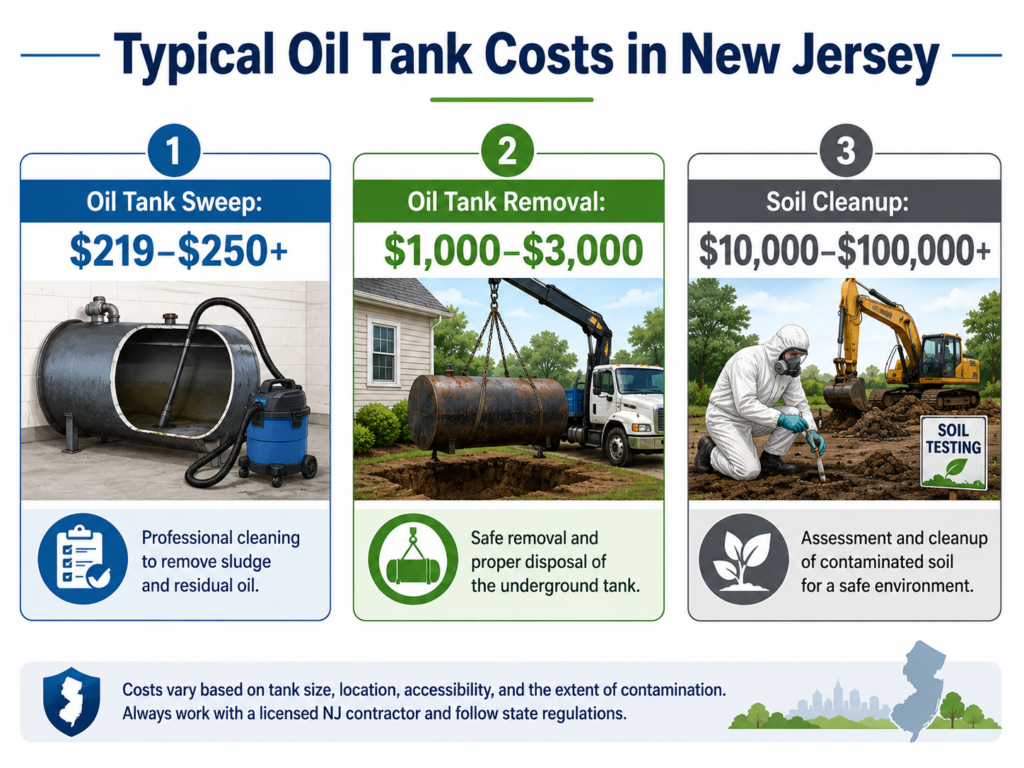
Here’s a quick comparison of typical oil tank–related costs in New Jersey:
| Service | Typical Cost (USD) | Notes |
| Standard oil tank sweep | ≈$250 | Covers most residential lots |
| GPR sweep | $400+ | Needed when scanning through concrete or for large properties |
| Military/First responder discount | ≈$225 | Special pricing for service members |
| Exploratory dig | $450+ | Hand digging to confirm anomaly |
| Oil tank removal | $1,000–$3,000 | Typical removal costs |
| Soil contamination cleanup | $10,000–$100,000+ | Severe leaks can exceed six figures |
Note: Prices vary with property size, access and contamination severity. Always request a detailed quote.
Schedule Your Oil Tank Sweep Today
Don’t let a hidden oil tank threaten your investment. If you’re buying, selling or simply want peace of mind, schedule an Oil Tank Sweep in New Jersey today. Our certified team at All In One Inspections offers prompt, thorough sweeps across Ocean, Union, Mercer, Monmouth, Somerset, Middlesex and Burlington counties. Click here to book your sweep or call us at 908‑910‑8203 to get started. Protect your home, your family and your future by taking action now.