An exploratory dig in New Jersey is a controlled digging service used to uncover and identify hidden underground concerns, such as a suspected oil tank, buried utility line, old septic system, drainage issue, water pipe problem, or unknown metal object. You may need an exploratory dig after an oil tank sweep, home inspection, or property scan finds something underground that cannot be confirmed from the surface.
For New Jersey homeowners, buyers, sellers, and real estate professionals, an exploratory dig can provide clear answers before a small concern becomes a major property, environmental, or closing issue. If you are searching for the best exploratory dig services in New Jersey, understanding the process, cost, and timing can help you make the right decision.
What Is an Exploratory Dig?
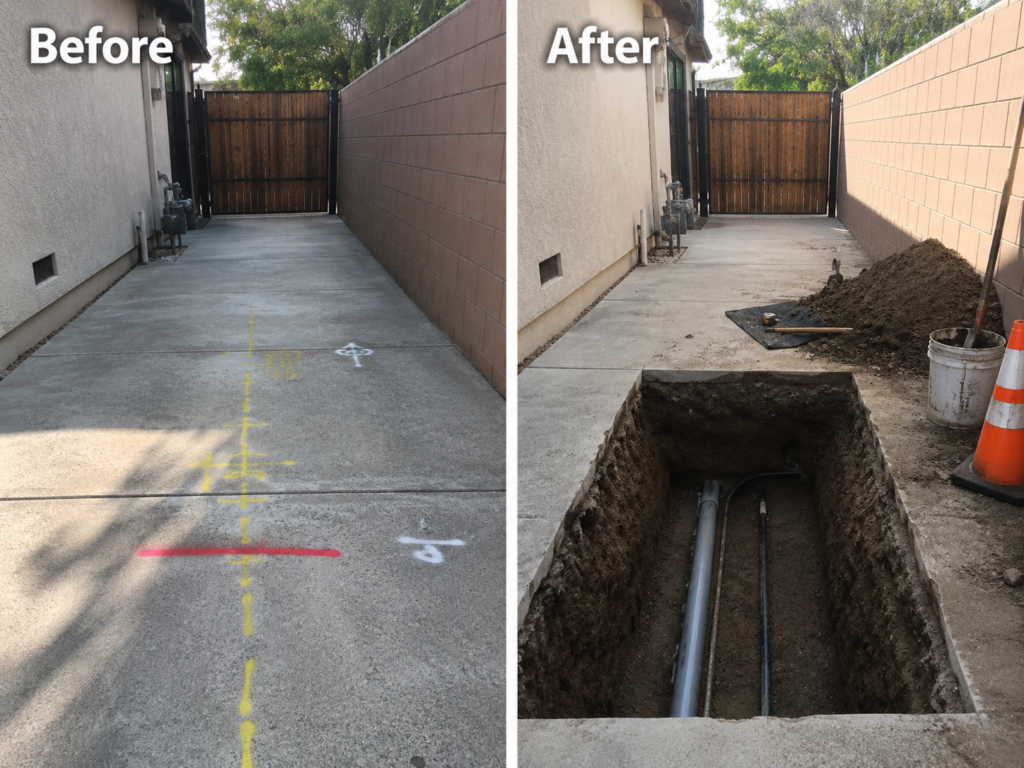
An exploratory dig is a targeted excavation performed in a specific area of a property to investigate what may be hidden below the ground. Unlike a large construction excavation, an exploratory dig is usually focused on one concern, such as a suspected underground oil tank, buried pipe, drainage problem, or structural issue near a foundation.
In simple terms, the goal is to answer one important question:
What is actually underground?
A professional exploratory dig may help locate or confirm:
- Underground oil tanks
- Septic tanks or abandoned septic components
- Buried water lines or utility pipes
- Drainage problems
- Old construction debris
- Metal anomalies found during an oil tank sweep
- Foundation or structural concerns
- Hidden issues connected to water intrusion
For many New Jersey properties, especially older homes, what is underground is not always clear from records alone. Previous owners may not know the full property history, old permits may be missing, and visible clues may be limited. That is why exploratory dig services NJ homeowners rely on are often connected to real estate inspections and environmental due diligence.
Why Exploratory Dig Services Matter in New Jersey
New Jersey has many older residential neighborhoods, especially in areas such as Ocean County, Union County, Mercer County, Monmouth County, Somerset County, Middlesex County, and Burlington County. Many homes have changed heating systems over time, and some properties may have had underground oil tanks, old utility lines, or buried structures from past use.
Common local scenarios include:
- A home once used oil heat but now uses gas or electric
- A tank sweep finds a metal anomaly in the yard
- A buyer’s inspection raises concern about a buried oil tank
- A seller wants to resolve property questions before listing
- A realtor needs fast answers before closing
- A basement or foundation area shows signs of water intrusion
- Old property records do not clearly show whether a tank was removed
In these situations, an exploratory dig NJ service may help confirm whether the concern is serious or harmless. For example, an oil tank sweep might detect a suspicious object near the driveway, front yard, side yard, or foundation wall. The object could be an abandoned oil tank, but it could also be scrap metal, an old pipe, or buried construction debris. A controlled exploratory dig helps confirm what the object is.
When Is an Exploratory Dig Needed After an Oil Tank Sweep?
An exploratory dig is often needed after an oil tank sweep when the inspection finds a suspicious underground object or metal reading that cannot be fully identified without digging.
An oil tank sweep in New Jersey is typically a non-invasive inspection used to search for signs of a buried oil tank. The inspector may look for visual clues, scan the property, and evaluate possible tank locations. If the sweep identifies an area of concern, an oil tank sweep exploratory dig NJ service may be recommended.
You may need an exploratory dig after an oil tank sweep if:
- The scan finds a possible metal anomaly
- The property has a history of oil heat
- A fill pipe or vent pipe is visible or suspected
- The seller cannot provide tank removal records
- The buyer’s attorney or inspector requests further confirmation
- The real estate closing is being delayed by the concern
- The suspected object is located where oil tanks are commonly found
- The property is older and has incomplete heating system records
This is especially important for real estate oil tank inspection NJ situations. A buried oil tank concern can affect buyer confidence, negotiations, mortgage approval, insurance questions, and the closing timeline. Confirming the issue early is usually better than guessing.
Exploratory Dig vs. Oil Tank Sweep: What Is the Difference?
Both services are useful, but they are not the same.
Oil Tank Sweep in New Jersey
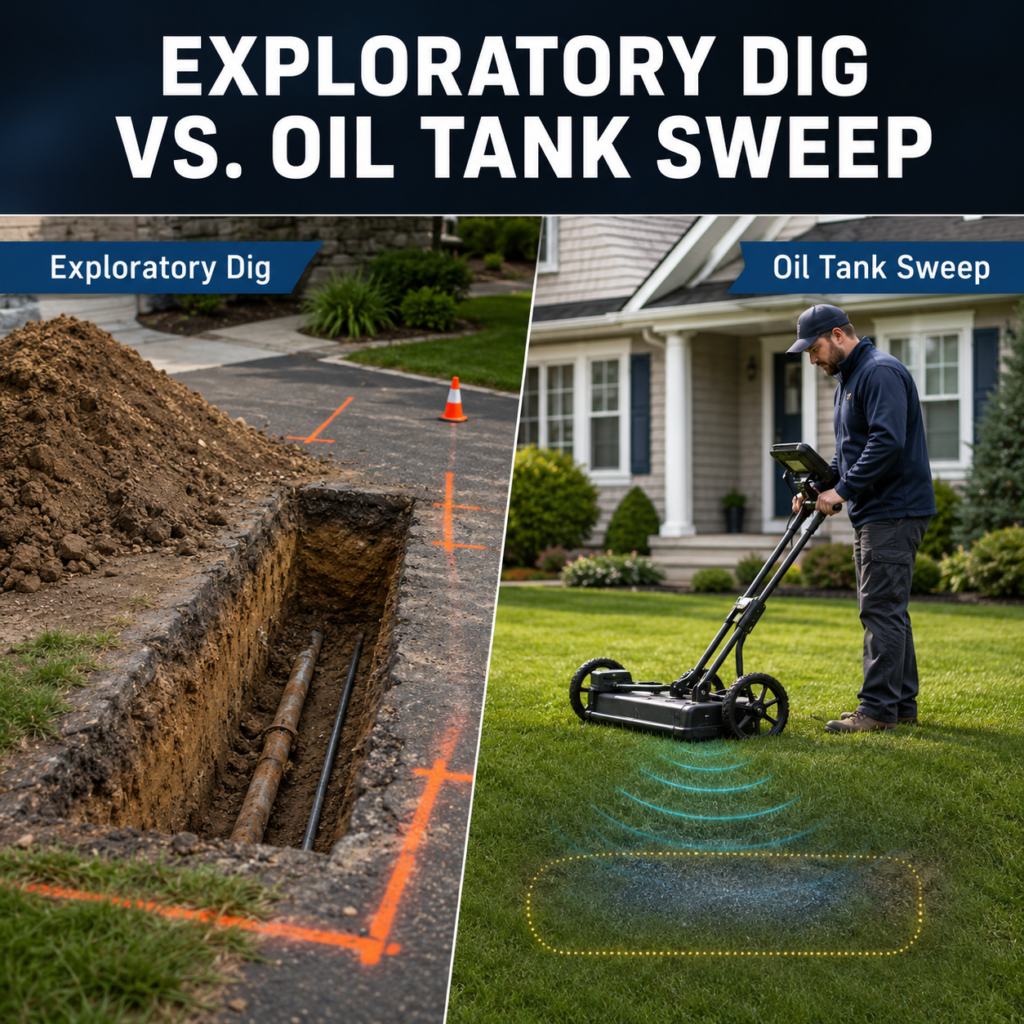
An oil tank sweep is typically the first step. It is used to look for signs of an underground oil tank or buried object without immediately digging. It may include a visual inspection, property history review, and scanning of likely tank areas.
Exploratory Dig in New Jersey
An exploratory dig is the next step when the sweep finds something that needs physical confirmation. It involves carefully digging in the suspected area to expose and identify the object or condition.
When You May Need Both
You may need both services when:
- You are buying an older home in NJ
- The home has converted from oil heat to another system
- A tank sweep detects an unclear signal
- A buried object must be confirmed before closing
- A realtor, buyer, or attorney requests documentation
For example, a buyer in Toms River may schedule an oil tank sweep before purchasing an older home. If the scan shows a possible metal object near the foundation, an oil tank sweep exploratory dig Toms River NJ service may help confirm whether it is an underground oil tank or another buried item.
Common Real-Life Examples in New Jersey
Example 1: Buyer Finds a Metal Anomaly Before Closing
A homebuyer in Monmouth County schedules an oil tank inspection NJ before closing. The inspection finds a metal reading near the side yard. The seller does not have records showing an oil tank removal. In this case, an oil tank exploratory dig NJ service may be needed to confirm what is underground before the buyer moves forward.
Example 2: Seller Wants to Avoid Last-Minute Delays
A seller in Union County knows the property once had oil heat but does not know whether a tank was ever buried outside. Instead of waiting for a buyer inspection to raise the issue, the seller schedules an oil tank sweep in New Jersey. If a suspicious object is found, an exploratory dig can help resolve the question before listing or during attorney review.
Example 3: Realtor Needs Fast Documentation
A realtor in Ocean County has a transaction delayed because an inspection report mentions a suspected buried tank. A professional exploratory digs service provider NJ can help investigate the concern, document the findings, and provide practical next steps for the buyer, seller, and agent.
How Much Does an Exploratory Dig Cost in NJ?
The cost of exploratory dig services in New Jersey depends on the size, depth, location, and complexity of the project. In many cases, exploratory digs may range from about $1,000 to $3,000, but the actual price can vary based on property conditions and the scope of work.
Factors that affect exploratory dig services in New Jersey cost include:
- Location of the suspected object
- Depth of the object or underground system
- Soil conditions
- Property access
- Whether hand digging or equipment is needed
- Whether the concern involves an oil tank
- Whether permits or additional documentation are needed
- Urgency of scheduling
- Whether follow-up testing or reporting is required
Are affordable exploratory digs worth it?
Yes, affordable exploratory digs can be worth it when the company provides careful work, honest communication, and clear documentation. However, the lowest price is not always the safest choice. A proper exploratory dig should be focused, controlled, and performed with respect for underground utilities, environmental concerns, and property conditions.
When comparing pricing, ask:
- What is included in the service?
- Will I receive photos or a written report?
- Do you handle oil tank exploratory dig NJ concerns?
- Will the technician explain next steps if something is found?
- Are there possible additional costs if the situation changes?
What Happens During an Exploratory Dig?
A professional exploratory dig usually follows a clear process.
Step 1: Review the Concern
The technician reviews the property history, inspection notes, tank sweep findings, visible clues, and the suspected area. This helps narrow the dig location and avoid unnecessary disruption.
Step 2: Identify the Target Area
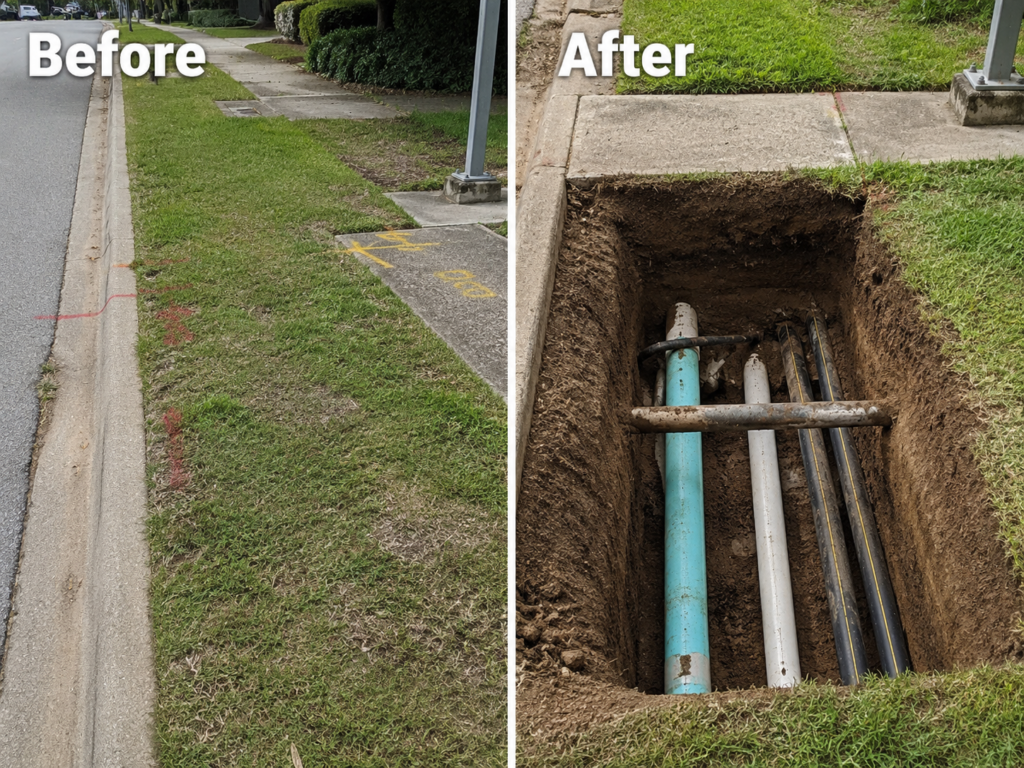
The area of concern is marked or reviewed carefully. The goal is to dig only where needed, not disturb the entire yard.
Step 3: Perform a Controlled Dig
The technician carefully opens the area to expose the object, pipe, tank, or condition below the surface. Depending on the situation, this may involve hand digging or equipment.
Step 4: Document the Findings
A professional should document what was found with photos, notes, measurements, and practical recommendations. This is especially important for buyers, sellers, realtors, and property managers.
Step 5: Explain the Next Steps
Possible outcomes include:
- No oil tank found
- Buried scrap metal found
- Old pipe or utility found
- Underground oil tank suspected or confirmed
- Drainage or water issue identified
- Additional environmental evaluation recommended
- Further professional service needed
Safety Warnings: What Not to Do
afety Warnings: What Not to Do
Exploratory digging may look simple, but guessing can be risky. Do not randomly dig around suspected underground objects without proper guidance.
Common mistakes include:
- Digging before utilities are marked
- Ignoring possible oil tank evidence
- Assuming a metal object is harmless
- Buying a property without resolving a tank concern
- Relying only on verbal history from a seller
- Failing to keep inspection documentation
- Choosing a provider based only on the lowest price
If an underground oil tank or contamination is found, additional rules, permits, or environmental steps may apply. This is why property owners should work with experienced inspection professionals and follow local requirements.
Exploratory Dig Services Across New Jersey
All In One Inspections provides exploratory dig services across New Jersey, helping homeowners, buyers, sellers, realtors, landlords, and property managers investigate underground concerns.
Exploratory Dig Ocean County NJ
Ocean County properties, especially in areas such as Toms River, Brick, Jackson, Lakewood, and nearby shore communities, may have older heating system histories or property records that are not always complete. If you need exploratory dig Ocean County NJ service or oil tank exploratory dig Ocean County NJ support, a professional inspection can help confirm what is below the surface.
Union County NJ
In Union County communities such as Westfield, Union, Elizabeth, Cranford, and Scotch Plains, older homes often require careful review during real estate transactions. An exploratory dig can help clarify buried oil tank or underground utility concerns.
Mercer County NJ
Properties in Princeton, Trenton, Hamilton, Lawrence Township, and surrounding Mercer County areas may need exploratory dig services when inspections reveal buried objects, old utilities, or drainage issues.
Monmouth County NJ
Monmouth County areas such as Shrewsbury, Red Bank, Freehold, Middletown, Long Branch, and surrounding towns often include a mix of older homes, coastal conditions, and real estate activity. An exploratory dig can help buyers and sellers address underground concerns before they become closing problems.
Somerset County NJ
In Bridgewater, Somerville, Hillsborough, Franklin Township, and nearby Somerset County areas, exploratory digs may support oil tank inspections, utility concerns, and property safety evaluations.
Middlesex County NJ
Middlesex County communities like Edison, Woodbridge, New Brunswick, East Brunswick, and Old Bridge have many residential properties where older infrastructure or heating history may create questions during inspections.
Burlington County NJ
In Burlington County areas such as Mount Laurel, Moorestown, Medford, Marlton, and Burlington Township, exploratory dig services may help homeowners investigate suspected tanks, drainage concerns, or underground property issues.
Emergency Exploratory Dig Services and 24/7 Concerns
Some searches for emergency exploratory dig services or 24/7 exploratory dig services come from buyers, sellers, and agents dealing with tight real estate deadlines. If a closing is approaching and an oil tank sweep finds an area of concern, fast scheduling can make a big difference.
However, not every situation can or should be rushed. The safest approach is to call as soon as the concern is discovered, explain the timeline, and confirm service availability.
You may need urgent exploratory dig help when:
- Closing is within days
- A buyer’s inspection finds a possible oil tank
- A seller needs documentation quickly
- A realtor is trying to keep a transaction moving
- A suspicious underground object must be identified before a decision is made
Prevention and Maintenance Tips for NJ Homeowners
While you cannot always prevent hidden underground issues, you can reduce risk by being proactive.
Before buying a home:
- Ask whether the property ever used oil heat
- Request oil tank removal records if available
- Schedule an oil tank sweep in New Jersey before closing
- Review inspection reports carefully
- Ask questions about unexplained pipes, caps, or yard depressions
Before selling a home:
- Gather heating system records
- Check whether a prior tank removal was documented
- Consider a pre-listing oil tank inspection NJ service
- Address concerns before a buyer raises them
- Keep all inspection and dig reports for future reference
For current homeowners:
- Watch for unexplained soil settlement
- Do not ignore old fill or vent pipes
- Investigate water intrusion near foundations
- Keep records of all underground work
- Call a professional if you suspect a buried tank or utility issue
When to Call a Professional in New Jersey
Call a professional in New Jersey when you suspect an underground issue that could affect property safety, value, or a real estate transaction.
You should contact an exploratory digs service provider NJ homeowners trust if:
- An oil tank sweep found a metal anomaly
- You are buying an older home
- The property has a history of oil heat
- The seller cannot provide tank documentation
- A home inspection recommends further evaluation
- You need real estate oil tank inspection NJ support
- You notice unexplained pipes, caps, or depressions in the yard
- You need clear documentation before closing
- You have concerns about underground utilities, drainage, or water pipes
A professional exploratory dig can help you avoid guessing and make decisions based on visible evidence.
Why Choose All In One Inspections for Exploratory Dig Services in New Jersey
All In One Inspections provides professional exploratory dig services in New Jersey for homeowners, businesses, real estate agents, buyers, sellers, landlords, and property managers. Our team understands local property conditions, older NJ infrastructure, and the pressure that comes with real estate inspection timelines.
What makes All In One Inspections a trusted choice?
- Local New Jersey service experience
- Exploratory dig services for buried oil tanks, septic systems, water pipes, and drainage concerns
- Support for oil tank sweep exploratory dig NJ situations
- Clear communication and practical recommendations
- Service across Ocean, Union, Mercer, Monmouth, Somerset, Middlesex, and Burlington counties
- Related environmental inspection services under one company
- Focused, careful, and professional work
All In One Inspections also offers related services such as oil tank sweep, mold inspection, mold testing, air quality testing, asbestos testing, lead testing, water intrusion inspection, and mold remediation. This gives property owners a more complete inspection solution when multiple concerns are involved.
Schedule Exploratory Dig Services in New Jersey
If you need an exploratory dig NJ service after an oil tank sweep, home inspection, property scan, or real estate concern, All In One Inspections can help you get clear answers.
Whether you are dealing with a possible underground oil tank in Ocean County, a real estate oil tank inspection in Union County, a suspected buried object in Monmouth County, or an oil tank sweep exploratory dig in Toms River NJ, our team is ready to help.
Schedule professional exploratory dig services in New Jersey today.
Call All In One Inspections or visit the main service page here:
Exploratory Dig Services in New Jersey
Local FAQs
1. What is an exploratory dig in New Jersey?
An exploratory dig in New Jersey is a controlled excavation used to confirm hidden underground concerns such as a suspected oil tank, buried pipe, septic system, drainage issue, or unknown metal object.
2. When is an exploratory dig needed after an oil tank sweep?
An exploratory dig is needed after an oil tank sweep when the inspection finds a metal anomaly or suspected underground object that cannot be confirmed from the surface.
3. How much does an exploratory dig cost in NJ?
Exploratory dig services in New Jersey often vary by location, depth, access, and complexity, with many projects commonly ranging from about $1,000 to $3,000.
4. Who provides exploratory dig services in Ocean County NJ?
All In One Inspections provides exploratory dig services in Ocean County, NJ, including areas such as Toms River, Brick, Jackson, Lakewood, and nearby communities.
5. Can an exploratory dig find a buried oil tank?
Yes, an exploratory dig can help expose and confirm whether a suspected underground object is a buried oil tank or another type of buried material.
6. Do I need an oil tank inspection before buying a house in NJ?
You should consider an oil tank inspection before buying a house in New Jersey if the property is older, has oil heat history, or lacks clear tank removal documentation.
7. Are emergency exploratory dig services available in New Jersey?
Emergency exploratory dig service availability depends on scheduling, location, and site conditions, so it is best to call All In One Inspections as soon as an urgent concern is found.